
Shoulder Slimming Without Surgery: A Complete Guide to Sleeker, Softer Shoulders
Finally, a Shoulder Slimming Approach Built for Women Who Want a Softer Silhouette

Shoulder slimming is the practice of reducing the visual width and muscle bulk of the shoulder line-specifically the upper trapezius and deltoid area-to create a softer, more tapered silhouette. In 2026, this isn't about crash dieting or shrinking your skeleton. It's about understanding whether your shoulders look broad because of trapezius hypertrophy, subcutaneous fat, poor posture, or some combination of all three, and then choosing the right tool for each.
There are three main routes to slimmer shoulders. The first is targeted botulinum toxin injections into the trapezius muscle-commonly called Traptox, trapezius botulinum toxin, or shoulder botulinum toxin - which relaxes and gradually reduces muscle size over one to six months. The second is strategic training and posture correction, which de-emphasizes bulk in the upper traps and medial deltoids while pulling the shoulders down and back. The third involves fat-reduction and body contouring options, from general fat loss through nutrition and activity to non-surgical procedures like cryolipolysis for the upper back and bra-roll areas.
If you've struggled with broad or square shoulders, a bulky trapezius from gym work or desk posture, tension in your neck and upper back, or discomfort in strappy and sleeveless clothing, you're dealing with a real and fixable concern. The problem is that most common advice-random shoulder workouts, spot-reduction myths, and extreme calorie restriction-either does nothing or actively makes the situation worse. Heavy shrugs, upright rows, and overhead pressing can increase muscle bulk in exactly the areas you're trying to slim. And spot reduction of fat is simply not possible; scientific consensus is clear on that. This guide is a practical, medically informed roadmap to help you choose the right combination of methods based on whether your width comes from muscle, fat, posture, or bone structure-and to set realistic expectations about what each approach can and cannot change.
Why Evidence‑Based Shoulder Slimming Works
Social media is flooded with shoulder slimming tips, but most lack clinical backing. The difference between a trending TikTok hack and a plan that actually delivers desired results is anatomy, data, and honest timelines. When you understand the mechanisms-how muscle activity drives trapezius hypertrophy, how posture correction elongates the neck and shoulder line, and how targeted injections or body contouring reshape soft tissue-you stop guessing and start progressing.
Core Benefits of a Structured Shoulder Slimming Plan
Improves your visual shoulder line - Transforms boxy or "swimmer" shoulders into a softer, more delicate shoulder contour without making you look weak or undermining functional strength.
Creates the illusion of a longer neck and more defined collarbones - By de-emphasizing the bulky upper trapezius, the neck-to-shoulder transition becomes smoother, and clothing drapes more naturally. V-necks and scoop necks create vertical lines that minimize shoulder width, amplifying the effect.
Can ease chronic trapezius tightness, desk-job neck fatigue, and tension headaches - Tension in the trapezius muscles can cause broader shoulder appearances and shoulder pain; relaxing overactive muscles addresses both aesthetics and discomfort simultaneously.
Reduces trial-and-error in the gym - Replaces generic "upper body days" with shoulder-friendly programming that avoids hypertrophy of the wrong muscles. High-repetition lower-to-moderate weight training builds muscle tone without bulk.
Gives predictable, trackable results - Sets clear timelines: 8–12 weeks for training changes, 3–6 months for toxin effects, and 6–12 weeks for fat loss around the shoulder girdle. You know what to expect and when.
How Shoulder Slimming Works: The Three Main Pathways
The best path to shoulder contouring depends on what's actually creating the width. If your shoulders are broad because of a thick, hypertrophic trapezius, the approach is different than if you carry subcutaneous fat over the deltoids and upper back. And if poor posture is rolling your shoulders forward and making them appear wider, fixing alignment alone can make a visible difference. Most people benefit from combining two or three of these pathways.
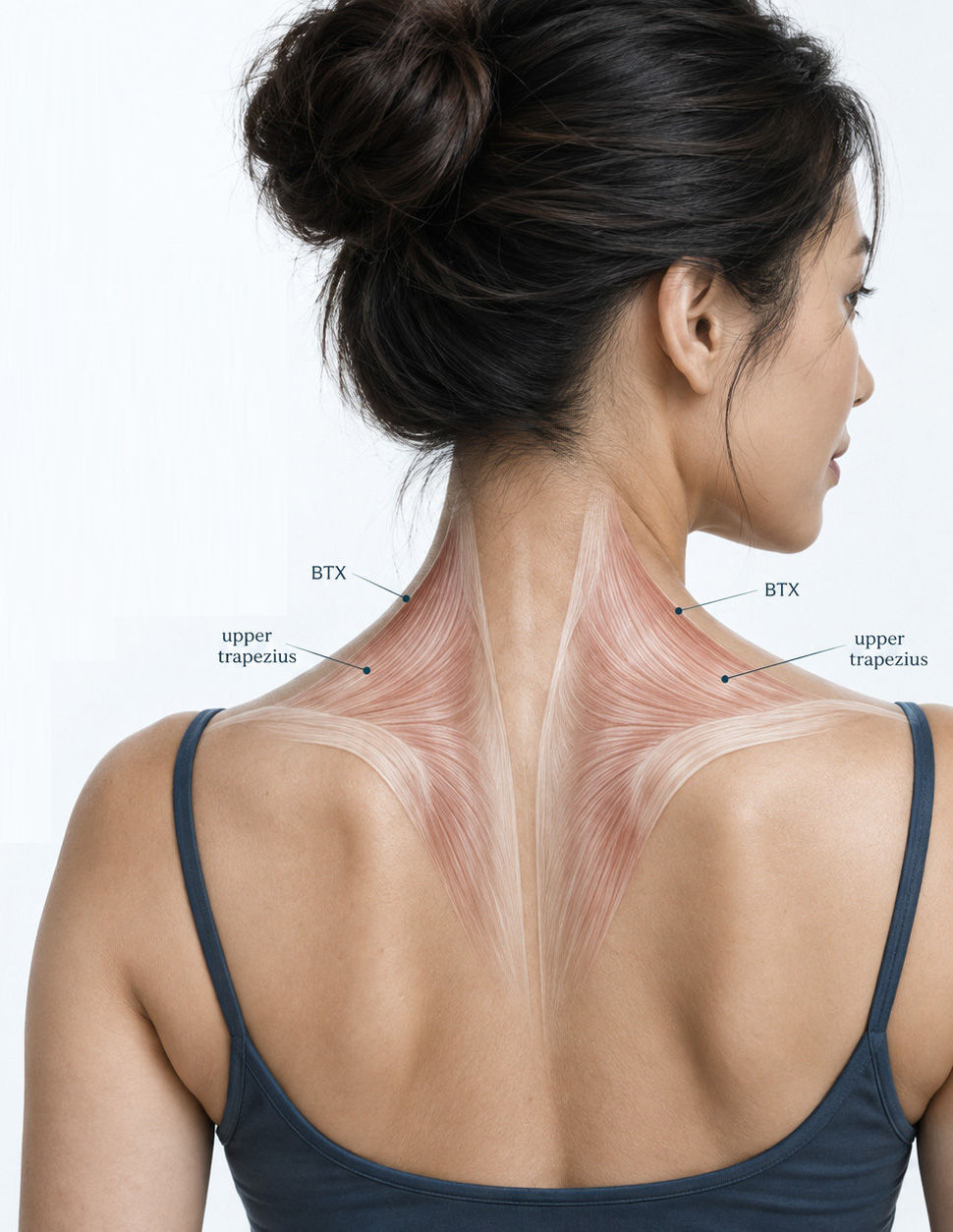
Pathway 1: Relaxing Bulky Trapezius Muscles with Shoulder Botulinum Toxin (Traptox / Shoulder-Tox)
Shoulder botulinum toxin-also known as Traptox or shoulder-tox -is a minimally invasive shoulder slimming procedure that works by blocking nerve signals at the neuromuscular junction of the upper trapezius, one of the key shoulder muscles targeted in this approach. When muscle activity is reduced, the muscle softens, contracts less forcefully, and gradually atrophies over the following weeks and months.
Clinical data supports the effectiveness of this approach. A 2023 retrospective study of 22 women receiving incobotulinumtoxin-A injections into the upper trapezius found that relative surface area dropped from approximately 31.26% at baseline to 26.83% at three months-roughly a 14–15% relative reduction. Ultrasonography confirmed that muscle thickness fell from about 5.99 mm to 4.64 mm at three months, a decrease of approximately 22%. Effects were still significantly below baseline at six months, though partial regrowth had begun.
The cosmetic changes patients see include a lowered shoulder line, less of a "hunched" look, and a smoother neck-to-shoulder transition. The procedure involves multiple small injections into the trapezius muscle and typically takes 15–30 minutes with no downtime required. Mild redness, swelling, or bruising can occur at the injection site and should be monitored. Initial muscle softening begins within 3–5 days post-treatment, with maximum aesthetic refinement around one to three months. Shoulder botulinum toxin creates a slimmer shoulder contour while also reducing muscle tension in the trapezius area.
Pathway 2: Strategic Training & Posture for a Slimmer Shoulder Profile
Traditional shoulder workouts are one of the most common reasons women unintentionally build a broader frame. EMG research confirms that shrugs and upright rows produce extremely high activation of the upper trapezius, and even lateral raises recruit the traps substantially, especially when lifters involuntarily shrug under load. If your aesthetic goals include slimmer shoulders, these movements are working against you.
A smarter training philosophy for shoulder slimming:
De-emphasizes hypertrophy of upper traps and medial deltoids. This means removing or drastically reducing heavy shrugs, upright rows, and high-volume overhead pressing from your program.
Focuses on mid-back, lower traps, core, and glutes to improve posture and "pull" shoulders down and back. Rows, pulldowns, and scapular retraction exercises strengthen the muscles that counterbalance upper trap dominance. Core stability exercises help improve shoulder appearance by correcting posture.
Uses high-rep, low-load shoulder stability work rather than mass-building moves. Exercises like lateral raises with very light weight target the lateral deltoids for definition without adding muscle bulk to the trapezius. Practicing scapular retractions improves posture and provides a streamlined look.
Pathway 3: Reducing Fat Around the Shoulder Girdle
Fat-driven width in the shoulder area typically sits over the deltoids, upper arms, and upper back-not the bone itself. It's important to be honest about what can and cannot be changed: bone width (acromion length, clavicle breadth) is skeletal and cannot be altered non-surgically. The goal is soft-tissue contour, not skeletal reshaping.
Realistic options for fat reduction around the shoulders include:
General fat loss via diet and activity. Spot reduction is not possible for fat loss, but overall fat loss through nutrition contributes to achieving toned shoulders. Many women find their upper body leans out relatively quickly within 8–16 weeks of a consistent calorie deficit and increased physical activity. Increasing overall physical activity supports fat loss and muscle definition.
Non-surgical body contouring. Cryolipolysis (fat freezing) is FDA-cleared for upper back ("bra rolls"), upper arms, and under-the-arm areas. Average fat reduction in treated areas ranges from approximately 15–28% at four months post-treatment. Radiofrequency and ultrasound-based devices offer alternatives for the same zones. Results take 8–12 weeks to fully manifest, and multiple sessions may be needed.
Liposuction of the deltoid or upper arm area is reserved for rare cases where non-surgical options have been exhausted. Surgical interventions carry additional considerations: visible scars, higher cost, significant downtime, and recovery restrictions on strenuous exercise for weeks.

Realistic Results and Expected Outcomes: What to Expect From Shoulder Slimming
Timelines and expected outcomes differ depending on whether you're targeting muscle, fat, or posture. Success usually looks like a lowered shoulder height in photos, an easier time fitting blazer shoulders, a more defined neck-to-shoulder curve, and reduced tension or pain in the shoulder area. Here's what the data says.
Botulinum toxin in the trapezius:
Onset: 3–5 days; visible softening at 2–3 weeks.
Max effect: around 1–3 months, with up to approximately 25–30% reduction in visible bulk in clinical studies. In the incobotulinumtoxin-A study, muscle thickness dropped roughly 22% by three months.
Duration: Results typically last 3–6 months after treatment. Some regrowth begins by six months; incobotulinumtoxin-A may retain reduction longer with less regrowth compared to onabotulinumtoxin-A (still significantly below baseline at one year in one RCT).
Who Shoulder Slimming Is (and Isn't) For
Not everyone needs aggressive shoulder slimming, and not everyone is a suitable candidate for every method. The key is informed choice-understanding what your body is doing, what you want to change, and which tools are appropriate for your situation.
Best Candidates for Shoulder Slimming
Women and men with visibly prominent trapezius muscles that stay elevated even when relaxed.
People whose shoulder width is out of proportion to hips or bust, creating a more "boxy" frame than they'd like.
Office workers, lifters, or dancers with chronic neck and upper back tightness linked to overactive traps-especially those experiencing muscle spasms or persistent discomfort.
Individuals seeking aesthetic refinement who have stable weight, realistic expectations, and are willing to maintain posture and training changes for sustained results.
When to Avoid or Delay Shoulder Slimming Treatments
Pregnant or breastfeeding individuals considering botulinum toxin treatments or surgical options.
People with neuromuscular disorders (e.g., myasthenia gravis) where muscle-relaxing toxin injections may be contraindicated.
Those with untreated body dysmorphic disorder or unrealistic expectations about "changing bone width." Consultation is essential to determine suitability and ensure healthy motivations.
Anyone unwilling to adjust training and posture-medical treatments alone may not deliver satisfying or sustained results. Shoulder aesthetics improve most when procedures are paired with lifestyle changes.

Frequently Asked Questions About Shoulder Slimming
Will Shoulder Slimming Make Me Weaker or Ruin My Posture?
Daily activities-carrying bags, typing, light lifting-are usually unaffected for most patients. If you're an athlete who relies on heavy overhead pressing or Olympic lifts, discuss this with your qualified doctor to ease tension without compromising performance.
Is Shoulder Slimming Permanent?
Botulinum toxin effects are temporary-results from shoulder botulinum toxin last approximately 4–6 months, with some studies showing meaningful reductions persisting up to six months before regrowth. Repeat treatments maintain results.
Can I Combine Shoulder Slimming With Jawline or Calf Slimming Treatments?
Yes, many aesthetic plans combine trapezius, masseter, and calf botulinum toxin for overall body contouring. Qualified professionals must account for total toxin dose across all treatment areas, medical history, and individual anatomy. Combining injections with global posture and strength work helps keep the body balanced and functional. Infections are a rare risk associated with any injection-based treatment, so ensure all procedures are performed in a proper medical setting by skilled practitioners.
Get Started on a Shoulder Slimming Plan today with MODE Medical Clinic.
Book an appointment here for Shoulder Slimming with Neurotoxin for price of SGD550.


